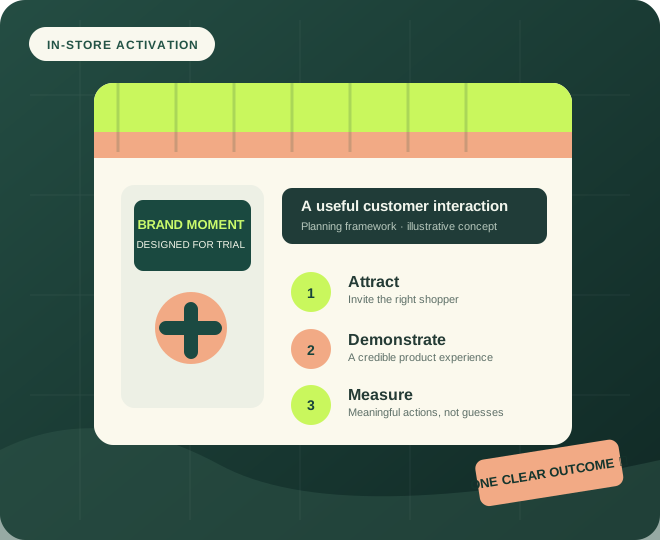
A product launch is vulnerable to two things: an impressive set-up that fails to explain the product, and an enthusiastic demonstration team without a dependable operational plan. A launch needs both storytelling and execution.
What this service is designed to solve
The approach could include hands-on demos, short presentations, assisted trial, tasting, branded hospitality, QR-led follow-up and dealer or retailer staff enablement. Not every element belongs in every launch.
The work to scope before a quotation
Launch-day audience and message hierarchy; demonstration script; product-handling and training requirements; stock assumptions; installation and breakdown schedule; post-event activity summary.
To build a dependable proposal, start with the intended audience, the target date or date range, the campaign format, the number of locations and a realistic budget bracket. Where the client already controls a venue, store, supplier or piece of equipment, that can materially change the plan. Where nothing is booked yet, the first phase should validate those assumptions rather than describe them as secured.
The operational reality
Product claims need approval by the brand, particularly for technical, health, financial or safety-related features. Stock shortages and retailer access can change the plan.
The commercial proposal should make clear who approves the concept, who signs off the site and which activities are delivered by specialist partners. We separate fixed production elements from location-dependent variable costs; that keeps the client in control if the scope changes before launch.
A sensible measurement plan
Measure how many eligible customers actually tried or understood the product, not how many happened to pass the stand.
Before launch, agree precisely what counts as an engagement, a qualified enquiry, a product trial or a conversion. Keep opt-in customer data and anonymised activity counts distinct. The final report should identify both observed outcomes and evidence gaps. This is more useful for a repeat programme than a single unqualified headline number.
What to include in the initial enquiry
- Locations and permissions: what is confirmed, preferred or still awaiting approval.
- Audience and objective: who needs to act and what action matters.
- Physical footprint: available floor area, power, storage and access conditions.
- People and production: likely staff roles, creative assets, product stock and specialist requirements.
- Dates and budget: firm deadlines, flexibility, buying authority and intended spending range.
- Success measure: how an outcome will be captured and who owns customer follow-up.
Frequently asked question
Do you organise nationwide launches?
We can develop a UK rollout model after confirming the flagship launch, supplier capability and each retailer or venue approval.
Start with a real brief
Share the campaign objective and the operating constraints. We will distinguish what is possible from what still needs supplier or site verification before preparing a detailed proposal. Discuss a campaign.
Turning a launch moment into a purchase decision
A retail launch should translate what is new into something the shopper can see, try or understand in seconds. The best creative format depends on product complexity.
- Message hierarchy: one primary benefit, one proof point, one simple shopper action.
- Demonstration readiness: working equipment, training, troubleshooting and a fallback when the product cannot be shown.
- Stock and follow-through: define whether trial stock, sale stock or pre-orders are involved and who owns replenishment.
- Learning loop: log objections and questions so the brand can improve staff guidance after the flagship.
The buyer decision: Require clear responsibility for the retailer relationship, launch approvals and post-event sales attribution before final pricing.